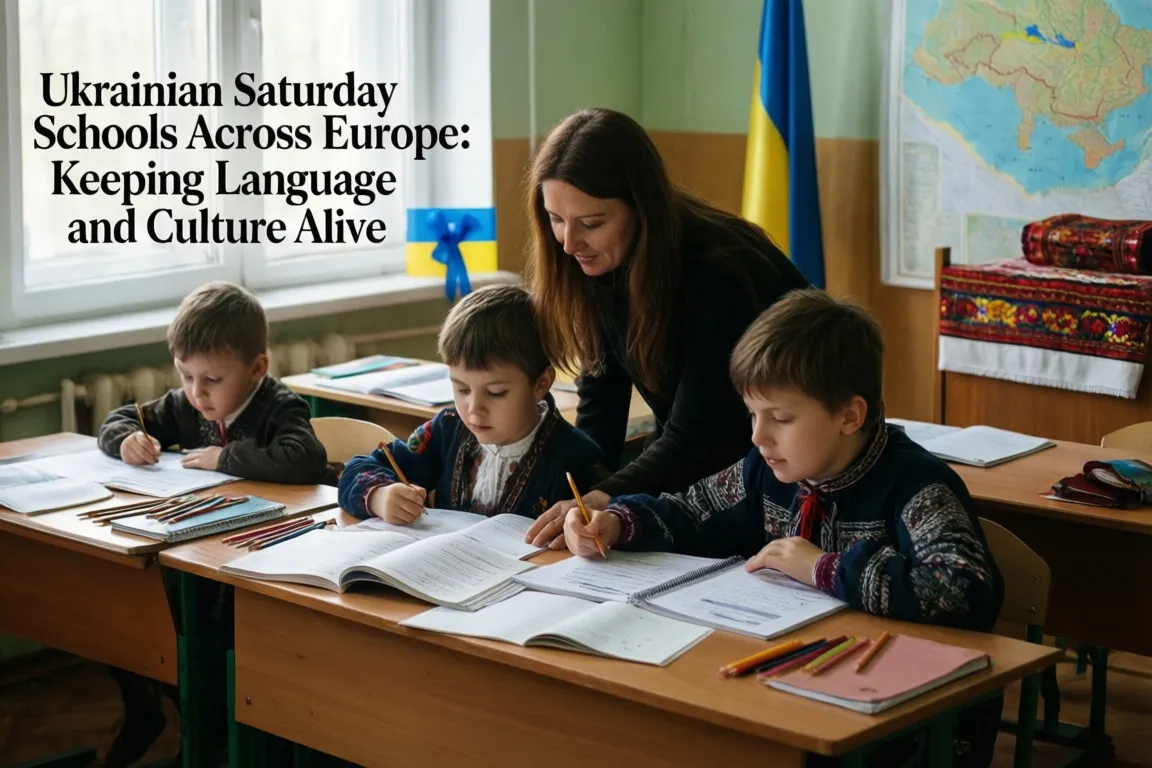
Ukrainian Saturday Schools Across Europe: Keeping Language and Culture Alive
Ukrainian Saturday schools across Europe run in community halls, church basements, and borrowed classrooms every weekend. Families use them to pass on language and traditions when daily life pulls kids toward the local language.
Where these schools operate
You find active groups in most large cities with Ukrainian communities. London runs three separate schools. Berlin has two. Paris, Warsaw, Prague, and Amsterdam each host at least one. Smaller programs meet in Manchester, Stockholm, and Zurich.
Check local Ukrainian associations or Facebook groups first. Many post term dates and contact details openly.
How to enroll your child
- Search for the nearest school using the city name plus “Ukrainian Saturday school.”
- Email or message the coordinator with your child’s age and Ukrainian level.
- Attend a trial Saturday to see the group and meet other parents.
- Pay the term fee, usually between 80 and 150 euros, which covers materials and venue costs.
What a typical Saturday includes
Classes last three to four hours. The first hour covers reading and grammar in small groups split by age. Kids then move to singing, folk dance, or short history talks.
Many schools finish with a shared lunch. One group in Berlin rotates parents to cook borscht or make varenyky with the older students. In London the 10-to-12 group runs a small library exchange so children can borrow Ukrainian books for the week.
| Age group | Main focus | Example activity |
|---|---|---|
| 5-7 | Basic words and songs | Counting games with toy trains |
| 8-10 | Simple reading and writing | Writing short postcards home |
| 11-14 | Grammar and conversation | Discussing a Ukrainian film clip |
Practical ways parents stay involved
- Offer to drive two or three families on rotation to cut travel costs.
- Share a Google Doc with vocabulary lists so kids can review at home during the week.
- Organize a joint trip to a Ukrainian exhibit when one comes to town.
- Connect with schools in other cities through existing parent chats for resource swaps.
One mother in Prague started a monthly video call between her son’s class and a similar group in Bratislava. The kids now exchange voice messages about their week in Ukrainian.